


Brief
Designing zero-downtime API key rotation
rotate api keys without downtime
Overlap windows, dual-key auth, and when to revoke.
approved. becomes the article below
Guide · from your auth docs
On the deskDesigning zero-downtime API key rotation
Technical articles that win Google clicks and get cited in AI answers like ChatGPT and Google's AI Overviews. Drafted from your product knowledge, checked against your sources, approved by your team.
A stack of three proof sheets for one article, taking turns at the front:
Built by the maker of mdedit.ai, a writing workspace 9,000+ writers have made part of their workflow.
Six weeks and $1,000+ per agency article.
Days instead of weeks, at a fraction of the cost, every review gate intact.
Fact-check everything after the AI is done.
Every fact checked before a human signs off.
A generic voice like every other AI blog.
Drafts shaped to your brand voice, not a template.
Paste your product URL. Cowrite reads your pages, docs, blog, and the search results around them, then proposes eight to ten briefs worth writing.
https://yourproduct.dev
What Cowrite reads
Every brief cites what it was built from.
Brief
rotate api keys without downtime
Overlap windows, dual-key auth, and when to revoke.
approved. becomes the article below
Guide · from your auth docs
Brief
idempotency key best practices
Key scoping, storage TTLs, and safe replay semantics.
Guide · from your API reference
Brief
api rate limiting strategies
Budgets, burst handling, and honest 429 responses.
Deep dive · from your gateway docs
Brief
cursor based pagination
rejected. this API changes next quarter
Your call, recorded
Brief
verify webhook signature
Signing schemes, clock skew, rotation-safe checks.
Tutorial · from your webhooks guide
+4 more briefs in this batch, each yours to approve or reject.
Approve a brief and the run below starts.
The visuals
Figures are generated with the draft and reviewed beside the prose. Diagrams, charts, code, tables, math, and motion, from Mermaid to Manim, plus AI illustration.
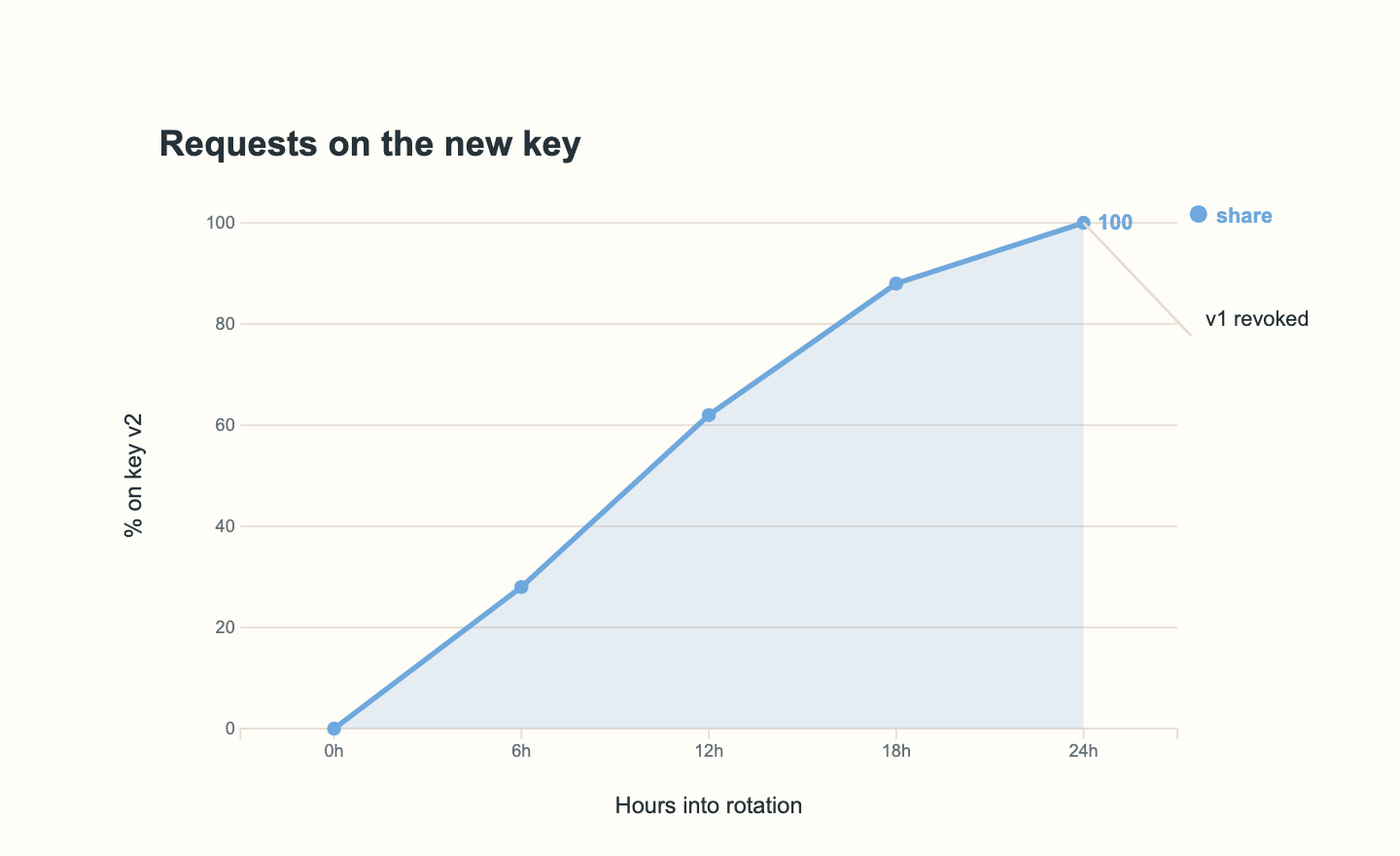
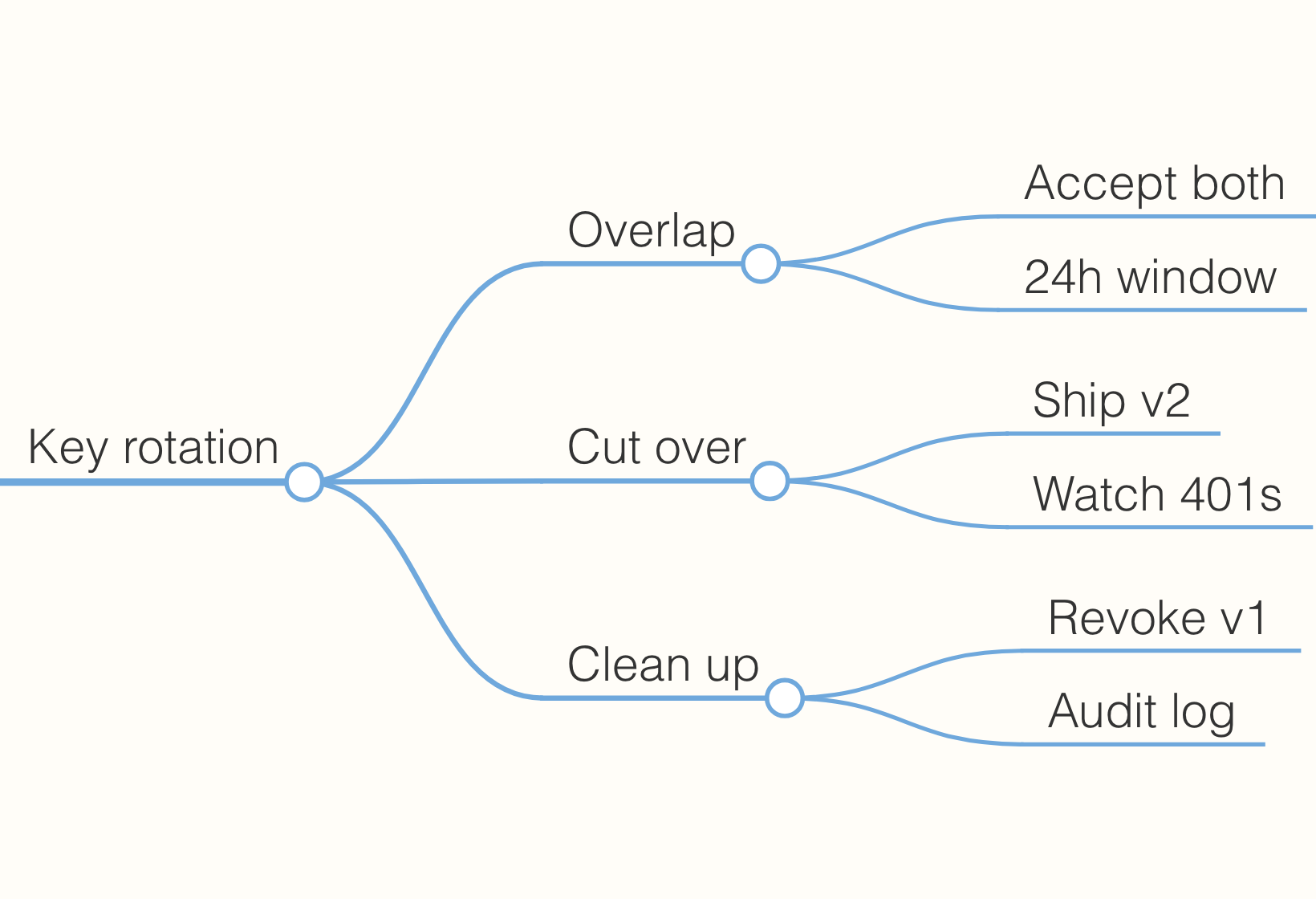
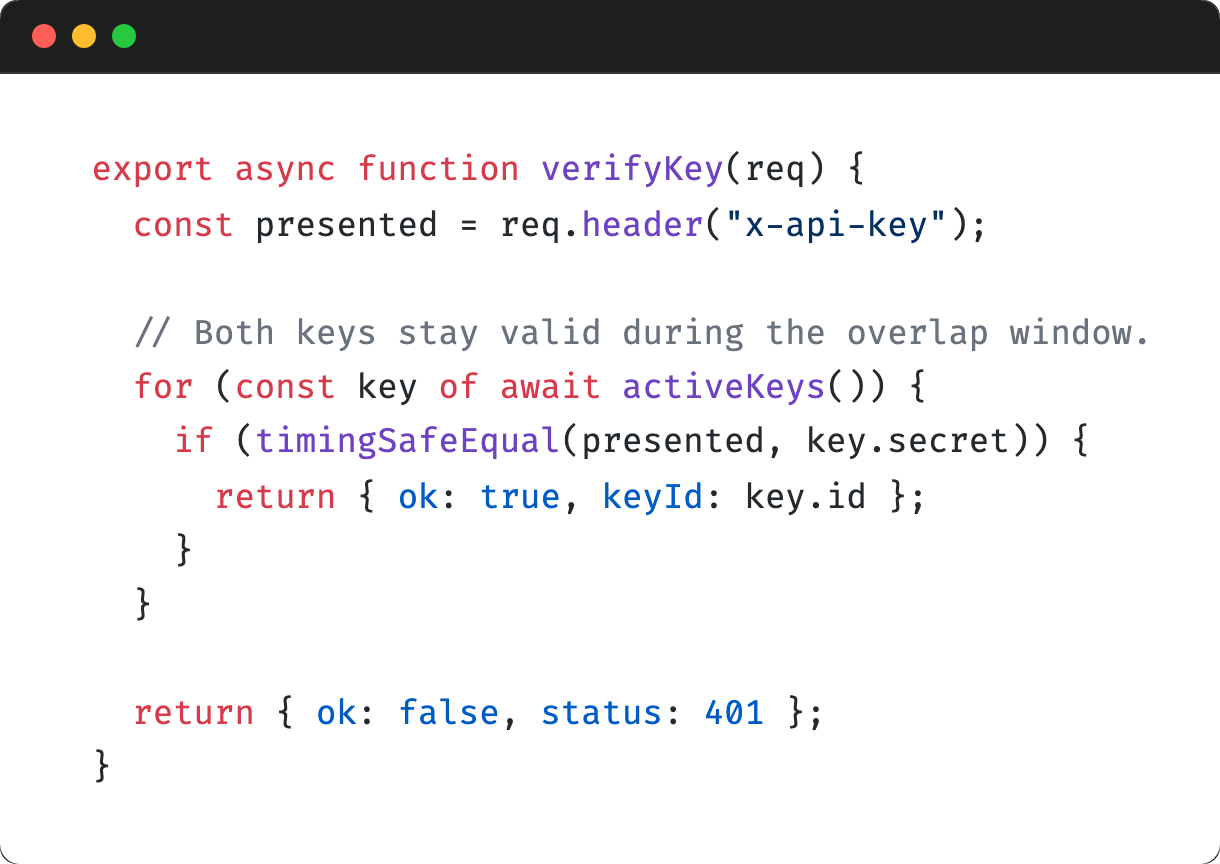
The overlap window is the whole trick. Issue the new key, let both keys authenticate while clients migrate, and revoke the old one only after traffic has moved.
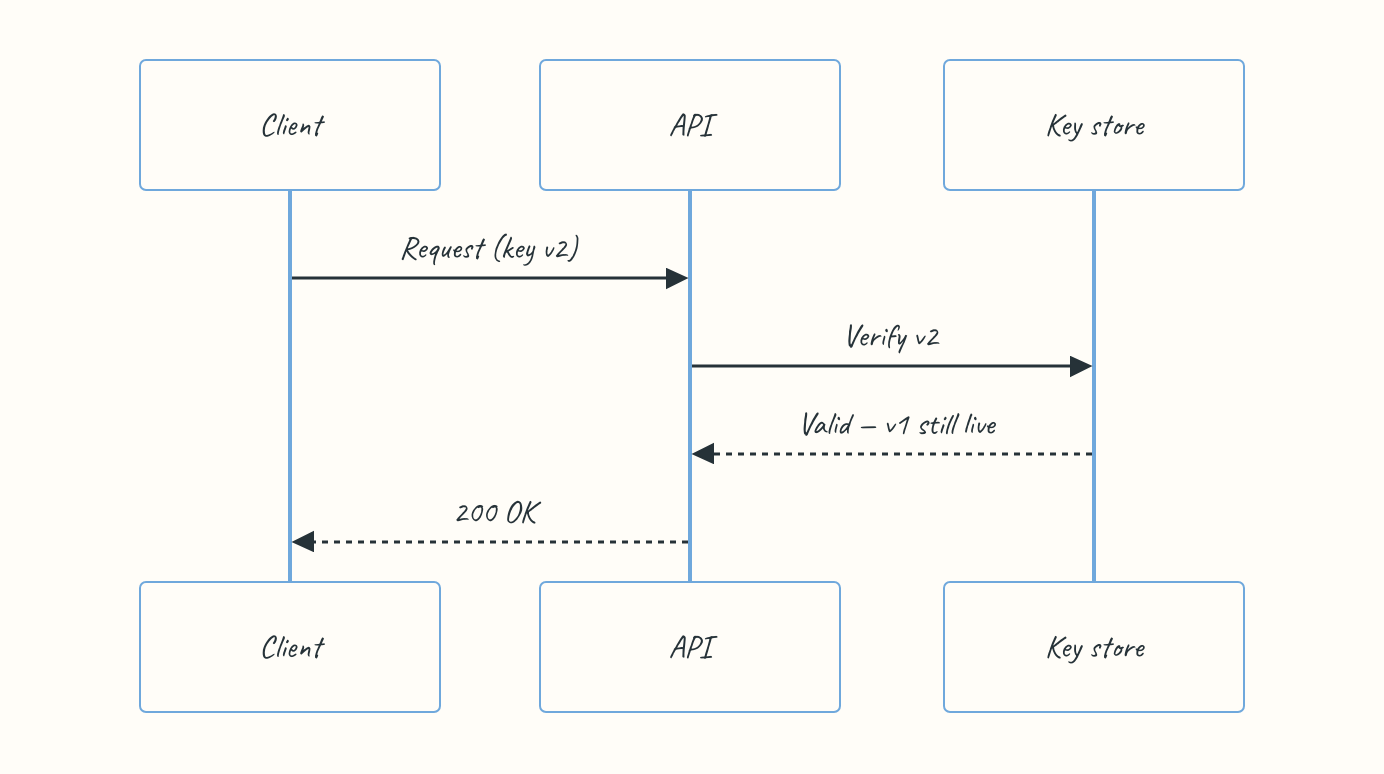
rendered with the draft
How long to wait follows from the longest-lived token still in flight:
trevoke ≥ tissue + TTLmax + Δ
Traffic during the cutover tells you when that has happened:
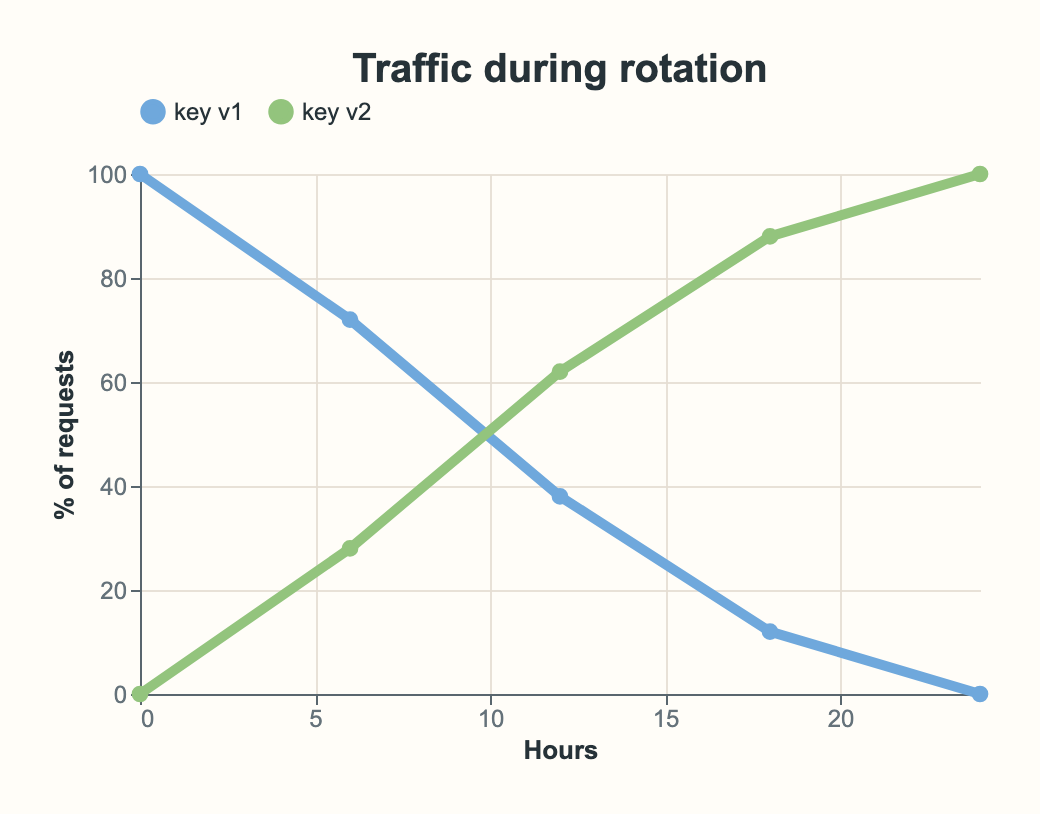
Every frame was produced by Cowrite's visual engines.
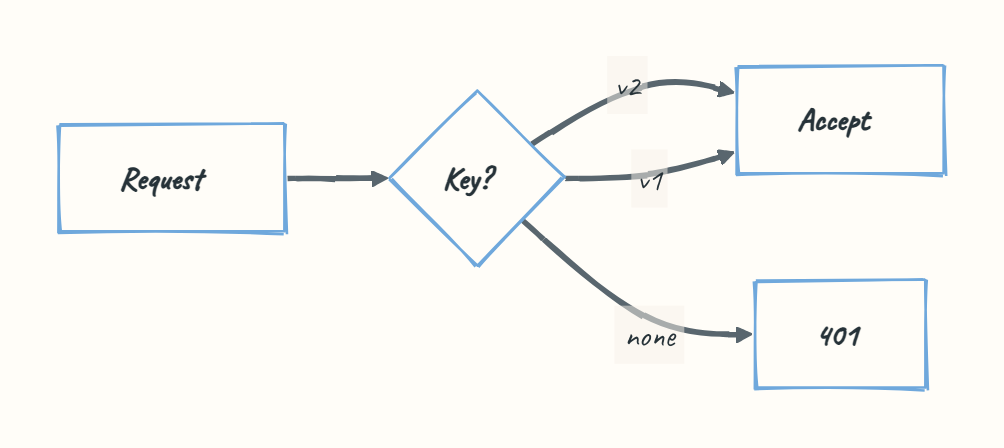
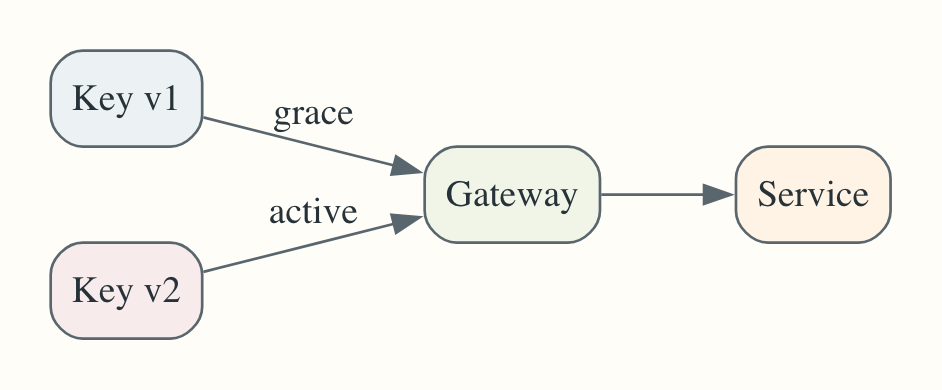
You set the bar once. Every article meets it, no matter who is in the queue that day.
Draft v1
Designing zero-downtime API key rotation
Rotating keys never drops production traffic.Source this claim.
Draft v2
Designing zero-downtime API key rotation
With overlapping validity, rotation completes with no dropped requests.1
Approved
After sign-off
Approved articles publish in one click or on a schedule, to the CMS you already use. Then Search Console reports back, query by query.
Publishing
Schedule activeConnected destinations
Designing zero-downtime API key rotation
PUBLISHEDIdempotency keys that survive retries
SCHEDULEDRate limiting without client pain
IN REVIEWOne click now, or a date the calendar keeps. Exports still ship: Markdown, HTML, PDF, DOCX, ODT.
Performance
Tracking activeGoogle Search Console · Last 28 days
Example report · illustrative figures
Search impressions
12.4K
+21%
Search clicks
486
+34%
CTR
3.9%
+0.6pt
Avg. position
6.2
up from 9.8
Metrics synced from the accounts you connect.
Predictable output at scale without sacrificing technical credibility. Cowrite handles keyword research, source-checked drafts, and approval workflows, so your team focuses on decisions, not drafts.
See plans for teams →Your product docs, your use cases, your voice. You bring the product knowledge; Cowrite handles search intent, structure, and internal links.
Start your free trial →
I've shipped technical tutorials and product explainers across publications and company blogs. The hard part was rarely the first draft. It was knowing what was worth writing, keeping the draft tied to product reality, and making every claim hold up to a technical reader.
Cowrite comes from the same writing and product-building experience behind mdedit.ai, my markdown editor for technical writers. Cowrite carries that discipline earlier into the pipeline: search opportunity, source-aware drafting, and review gates before anything ships.
Cowrite is early. The roadmap says plainly what doesn't exist yet.
Pro starts at $29/month ($290/year), Scale starts at $79/month ($790/year). Both plans include a 3-day free trial, card required, cancel anytime.
No. If your content strategy is volume at any quality, there are cheaper tools. Cowrite is for teams ranking on technical queries their competitors cannot answer without their documentation.
Research, briefs, outlines, drafting, source-checking, visual generation, and review gates are live today. So is publishing: an approved article can go straight to WordPress, Ghost, Hashnode, dev.to, X articles, a GitHub repository, or your own webhook, either right away or on a date you schedule, and it still exports as Markdown, HTML, PDF, DOCX, or ODT. Google Search Console performance tracking is live for the accounts you connect. Anything not listed here should be treated as not live yet.
Projects can require approval at the outline and draft stages. Your team approves before the pipeline continues, or requests changes with specific feedback. Approvals, revisions, and generation events are recorded with actor and timestamp.
Cowrite renders diagrams and charts with Mermaid, Graphviz, Markmap, Vega-Lite, Plotly, and D3, sets math with KaTeX, and styles code blocks and tables to match the article. It also produces motion where a still will not do: Manim explainer videos, animated charts, and Remotion diagram videos, plus AI-generated cover images and illustrations.
Drafts are checked against the product or source material you provide before they are treated as publication-ready. This is a technical review pass, not a guarantee that every claim is valid, and it is not a full ingestion of a company knowledge base.
A learned representation of your team's writing voice, built from your existing published content. It keeps tone, vocabulary, and heading style consistent across drafts instead of reinventing your voice every article.
Yes. Articles live in workspaces with teams and permissions, versioning and cloud sync, commenting and suggestions, and a contextual AI chat assistant in the editor. The pipeline is the front door; the editor is where your team works.
Your projects, drafts, and connected source material stay in your workspace. Google Search Console performance tracking is connection-level and only active for accounts you connect.
Source-checked against your docs. Approved by your team. Ready to rank.
From $29/month. 3-day free trial, cancel anytime.